
Epigenetics and Methylation
Cellular Health Starts at the Epigenetic Level
At the center of cellular performance is epigenetic health, the system that determines how genes are expressed in response to nutrition, environment, and physiological demands. This is the foundation of overall wellness, supporting how the body grows, adapts, and functions over time.
While DNA remains unchanged throughout life, epigenetic mechanisms guide how cells behave, communicate, and respond to internal and external signals. These processes are essential for maintaining cellular integrity, supporting metabolic balance, and enabling long-term adaptability.
Nutrition plays a central role in this system. The nutrients we consume directly influence epigenetic pathways, helping regulate gene expression, support cellular resilience, and promote healthy aging.
Explore Solutions
Epigenetic Health is Foundational to Cellular Health
While our DNA sequence remains fixed, epigenetic mechanisms determine how genes are expressed, guiding how cells function, adapt, and communicate across the lifespan. Nutrition plays a central role in shaping these processes, influencing development, cellular resilience, and healthy aging.
Epigenetic health refers to the body’s ability to regulate gene expression in response to internal and external signals such as nutrition, environment, and physiological demand. These regulatory processes help maintain cellular integrity, coordinate metabolic activity, and support long term adaptability.
Healthy epigenetic function supports prenatal and early development, cognitive function, energy metabolism, cellular repair, and healthy aging, with methylation serving as one of the key processes that helps regulate these outcomes.
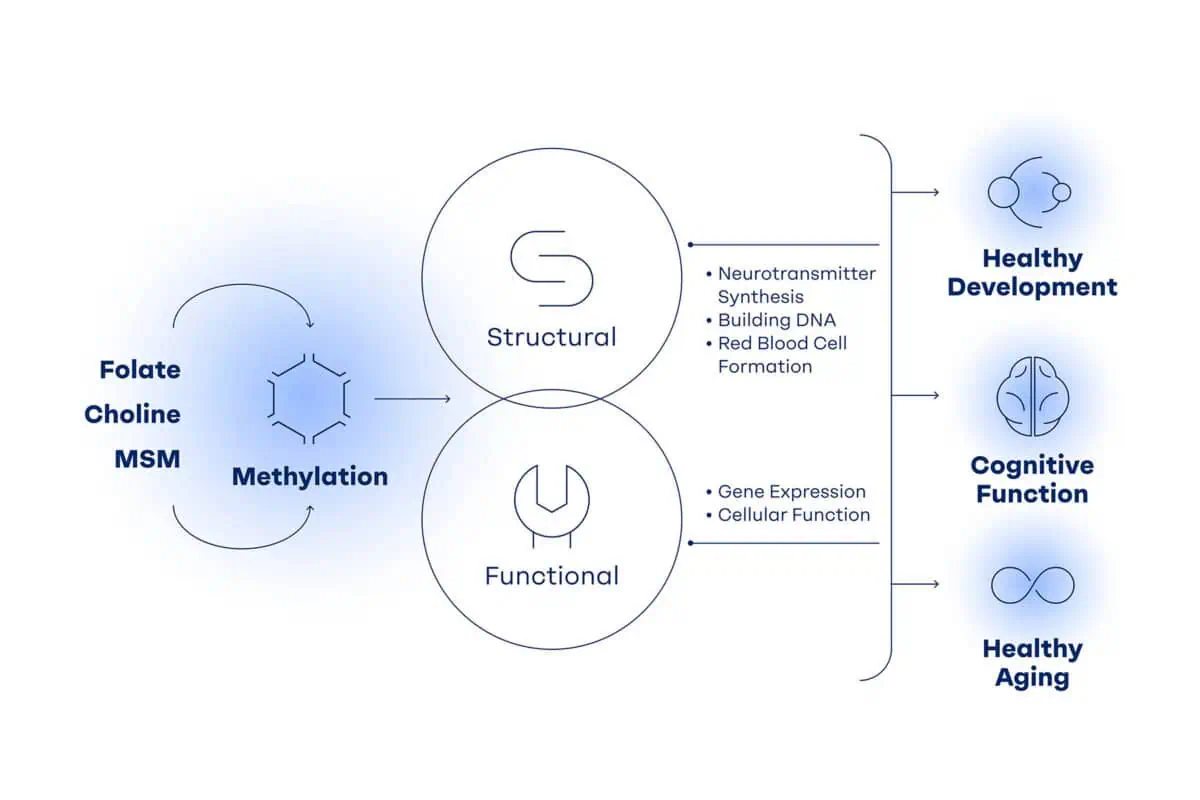
What is Methylation?
Methylation acts as a key biochemical process within one-carbon metabolism, responsible for transferring methyl groups that support both structural and functional cellular needs.
Effective methylation depends on a network of nutrients that work together within one-carbon metabolism. Nutrients such as folate, choline, and sulfur play distinct, but complimentary roles in maintaining balanced methylation patterns, supporting the body’s ability to respond to stressors and provide methyl availability, maintain cellular integrity and help sustain epigenetic balance across the lifespan.
Through Methylation Cells are Able to:

Support neurotransmitter synthesis and signaling

Maintain DNA & RNA integrity

Support metabolic pathways, growth and development

Regulate gene expression and epigenetic patterns
Why Methylation Matters
Efficient methylation supports the body at both a cellular and systemic level. It plays a central role in processes like DNA synthesis, neurotransmitter balance, and detoxification, helping maintain normal cellular activity across tissues.
In the brain, methylation contributes to healthy cognitive function, including memory, learning, and mood regulation. Throughout the rest of the body, it supports cardiovascular health, immune resilience, and overall cellular performance.

Methylation and Healthy Aging
As we age, natural changes in methylation patterns can occur. These shifts may influence gene expression and contribute to reduced cellular stability over time.
Emerging research in epigenetics has shown that methylation patterns are not fixed. Instead, they respond to lifestyle and nutritional inputs, and are even used to estimate biological age through epigenetic markers.
Supporting methylation through targeted nutrition can help maintain:
- Balanced gene expression
- Cellular stability
- Healthy aging processes



Contact Us
Together, our brands, OptiMSM®, Optifolin+®, and VitaCholine® deliver a scientifically aligned portfolio of methyl donors and complementary nutrients to support cellular health across every life stage. Backed by quality, clinical research, and formulation expertise, these ingredients empower brands to develop differentiated products with confidence. Connect with us to explore formulation support, technical data, and partnership opportunities and discover how this integrated approach can elevate your next innovation.
Contact Us