Heart Health.
Prioritizing heart health is crucial for living an active, vibrant life. Good nutrition and supplementation play a significant role in regulating and maintaining a healthy heart.
We can all take steps to boost cardiovascular health.
Why should you care about having a healthy heart?
Taking proactive steps to support your heart health is a cornerstone of a healthy lifestyle. Adopting healthy habits10 that are essential steps in maintaining heart health include (but are not limited to):
- Avoiding smoking
- Getting regular physical activity
- Maintaining a healthy weight
- And, eating a healthy diet
Additionally, there are several essential nutrients that are known to promote healthy heart function.

Every Beat Counts: Heart Health Nutrition.
A healthy heart is vital to living a long, active lifestyle. According to the CDC, heart disease is also the leading cause of death for both men and women in the US, resulting in roughly 697,000 deaths annually. Every 34 seconds, someone in the US dies of cardiovascular disease, resulting in an estimated healthcare cost of $229 billion/year.2
Embrace a healthier lifestyle by increasing exercise, managing weight, and eating a balanced diet. Small changes can make a significant difference.
There are several essential nutrients that can promote healthy cardiovascular (heart) health.
Key Ingredients for Heart Health.
Studies have demonstrated that some of the most crucial minerals for cardiovascular health include magnesium, potassium, vitamin D, and calcium.

Potassium
Potassium works together with sodium to help regulate the movement of fluids in the body, which is critical for maintaining healthy blood pressure.2
Perhaps among the most under-appreciated nutrients with respect to heart health, is potassium. Potassium is an essential mineral that works in concert with sodium to help regulate the movement of fluids in the body, which is critical for maintaining healthy blood pressure.14
Potassium Glycinate Complex

Calcium
Lastly, while calcium is commonly associated with bone health, it also plays a role in regulating blood pressure and blood vessel function.8
Calcium, while perhaps best known for supporting strong bones, is also a key mineral that helps maintain blood vessel function and blood pressure control.9 It also helps with blood clotting, muscle contraction, and maintaining a normal heart rhythm. Calcium carries an authorized health claim on its relationship to a reduced risk of osteoporosis.11
CalciumMore About Our Essential minerals for Heart Health
Magnesium: May Reduce the Risk of High Blood Pressure
While data are still emerging, in January 2022, the FDA formally acknowledged this emerging relationship and announced a Qualified Health Claim regarding Magnesium and hypertension: “Inconsistent and inconclusive scientific evidence suggests that diets with adequate magnesium may reduce the risk of high blood pressure (hypertension), a condition associated with many factors.”6
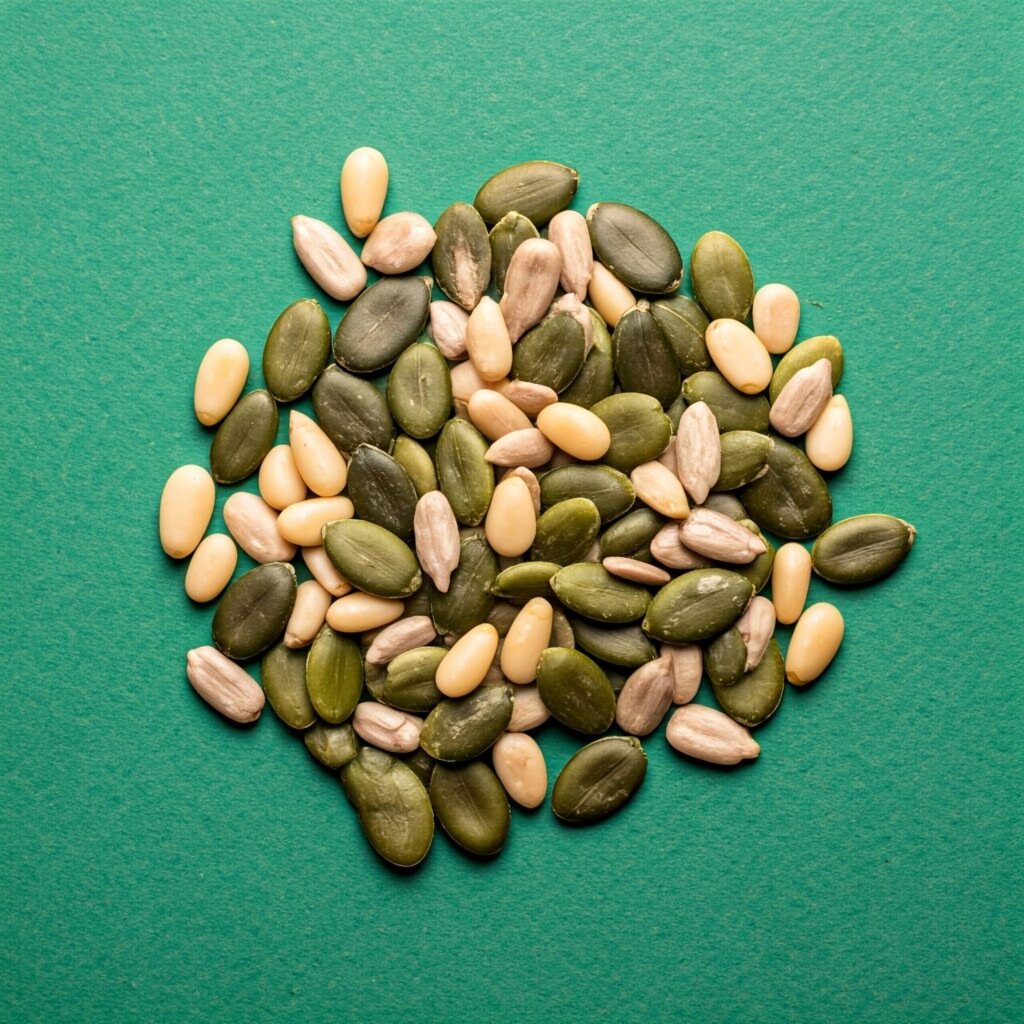
The current Recommended Dietary Allowance (RDA) for Magnesium is 420 mg/day and 320 mg/day for adult men and women, respectively.7 Magnesium can be found in a variety of foods, our everyday diets, through foods such as nuts and seeds, soy products, leafy greens, and legumes4 – yet roughly half of all Americans do not get enough Magnesium in their diet.8
Calcium: Reduction of Hypertension Risk
It’s important to remember that, like Magnesium, Calcium also carries a qualified health claim for the reduction of hypertension risk (“Some scientific evidence suggests that calcium supplements may reduce the risk of hypertension. However, FDA has determined that the evidence is inconsistent and not conclusive”).12
The body’s need for calcium increases as we age. Experts recommend that adults aged 19-50y get 1000 mg/day of calcium in their diets, however, this requirement increases to 1200 mg/day for women beginning at age 51y and for men beginning at age 71y.9
Due to the high prevalence of inadequate calcium intake and the public health consequences related to it, the 2020-2025 Dietary Guidelines for Americans lists calcium as a “Dietary Component of Public Health Concern” for nearly all ages and stages of life.13
Potassium: The Relationship between Diet and Heart Health
This is a well-established diet & heart health relationship, with the FDA authorizing a health claim for potassium and hypertension/stroke, reading “Diets containing foods that are good sources of potassium and that are low in sodium may reduce the risk of high blood pressure and stroke”.15
The Dietary Reference Intakes (DRIs) for Potassium were recently revised in 2019, with the recommended intake being updated to 3400 mg/day and 2600 mg/day for men and women, respectively.16 Unfortunately, most Americans fall well below that recommendation, with less than 1/3 (29%) of all Americans getting enough potassium in their diets from food and beverages alone.
Like calcium, potassium was listed by the 2020-2025 Dietary Guidelines For Americans as a “Dietary Component of Public Health Concern” for all Americans over age 1y, due to the high prevalence of inadequate intakes is widespread and the public health challenges associated with it.13 Potassium can be found in foods such as apricots, raisins, potatoes, and orange juice.14

— Eric Ciappio (PHD, RD), Balchem Strategic Development Manager, Nutrition ScienceMinerals play incredibly important roles in maintaining heart health, and millions of Americans do not get enough in their diets.
Balchem’s Albion Minerals portfolio offers a wide variety of options of these essential minerals tailored to provide unique benefits* and fantastic performance in multiple applications.