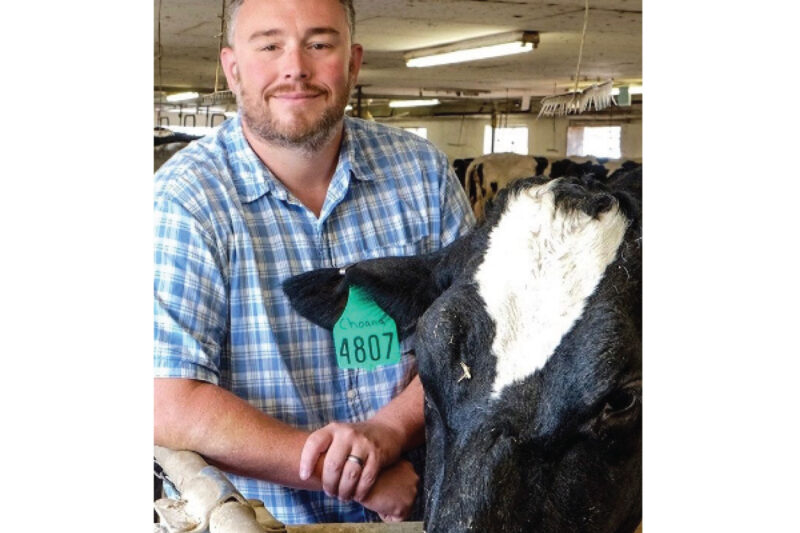
Recorded live at the Florida Ruminant Nutrition Conference, as part of the Real Science Exchange podcast; Dr. Fábio Lima (University of California–Davis) and Dr. Jose Santos (University of Florida) discuss one of the foundational studies on rumen-protected choline in transition dairy cows. In this episode, they are joined by co-host Dr. Clay Zimmerman. The group revisits the landmark research that helped establish the role of choline in improving liver health, reducing metabolic disorders, and improving lactation performance.
Episode 214: ReaShure: Effects on Production, Health and Reproduction in Dairy Cows
The discussion begins with the origins of the research and the collaboration between Dr. Santos and Dr. Lima on large commercial dairies in California. They also share the challenges of conducting nutrition research under real-world dairy conditions. Additionally, they explain how these early studies became a cornerstone of transition cow nutrition research. Their experiences implementing treatments on commercial operations provided valuable insights. Ultimately, these insights would influence dairy management practices around the world. (00:00 – 05:22)
The conversation then shifts to the study objectives and hypotheses that guided the research. The researchers discuss how supplemental choline was expected to improve liver function by reducing triglyceride accumulation, enhancing fat export from the liver, and supporting energy metabolism during the transition period. The episode also reviews two complementary experiments. These experiments evaluated both prepartum-only and prepartum-plus-postpartum supplementation strategies. Thus, they helped establish a deeper understanding of choline’s role in dairy cow health. (05:23 – 08:25)
The panel next explores the health and production outcomes observed in the research. Results included improvements in milk yield, energy-corrected milk production, and milk component yields, along with reductions in transition-related disorders such as clinical ketosis, mastitis, and retained fetal membranes. These findings were among the first to demonstrate a clear relationship between improved liver function and enhanced lactation performance. As a result, they helped reshape how the industry viewed transition cow nutrition. (08:26 – 17:38)
One of the most influential aspects of the study was the liver biopsy research discussed later in the episode. Dr. Lima explains how cows supplemented with rumen-protected choline exhibited lower liver triglyceride concentrations than unsupplemented cows. The researchers also found a strong relationship between plasma choline concentrations and improved liver health. Therefore, this provides some of the most direct evidence supporting the proposed mechanism behind rumen-protected choline supplementation. (17:39 – 22:26)
Beyond liver health, the conversation explores potential biological mechanisms that may explain reductions in mastitis and retained placentas among supplemented cows. The panel discusses how improved liver function may support immune competency, reduce inflammatory burden, and improve nutrient utilization during the transition period. These findings suggest that the benefits of choline supplementation extend beyond preventing fatty liver. Furthermore, they may contribute to broader improvements in overall cow health and resilience. (22:27 – 26:42)
The discussion then expands into feed efficiency, dry matter intake, nutrient digestibility, and emerging research hypotheses surrounding choline’s impact on whole-animal metabolism. The researchers reflect on how the original study sparked decades of additional research investigating the role of choline in dairy cow productivity, reproduction, metabolic health, and long-term performance. They also discuss new areas of interest, including potential effects on lower-gut fermentation and nutrient utilization. (26:43 – 30:51)
The conversation then turns to health outcomes. The researchers review reductions in clinical ketosis, mastitis, retained placenta incidence, and overall disease burden observed among supplemented cows. Potential biological mechanisms are explored, including improved liver function, enhanced immune competence, reduced inflammation, and better metabolic adaptation to the transition period. (30:52 – 38:19)
As the episode concludes, Dr. Santos and Dr. Lima reflect on the lasting impact of the research and how one of the earliest commercial dairy studies evaluating rumen-protected choline helped establish the scientific foundation for what has become one of the most extensively researched nutritional interventions in transition cow management. Their conversation provides valuable historical perspective on the evolution of dairy nutrition science. It also highlights why rumen-protected choline continues to play an important role in supporting transition cow health and performance today. (38:20 – 48:29)
Conclusion
Please subscribe and share with your industry friends. Invite more people to join us at the Real Science Exchange virtual pub table. Please be sure to register for our upcoming Real Science Lecture Series webinars.
Finally, if you want one of our Real Science Exchange t-shirts, screenshot your rating, review, or subscription. Then, email a picture to anh.marketing@balchem.com. Include your size and mailing address, and we’ll mail you a shirt.