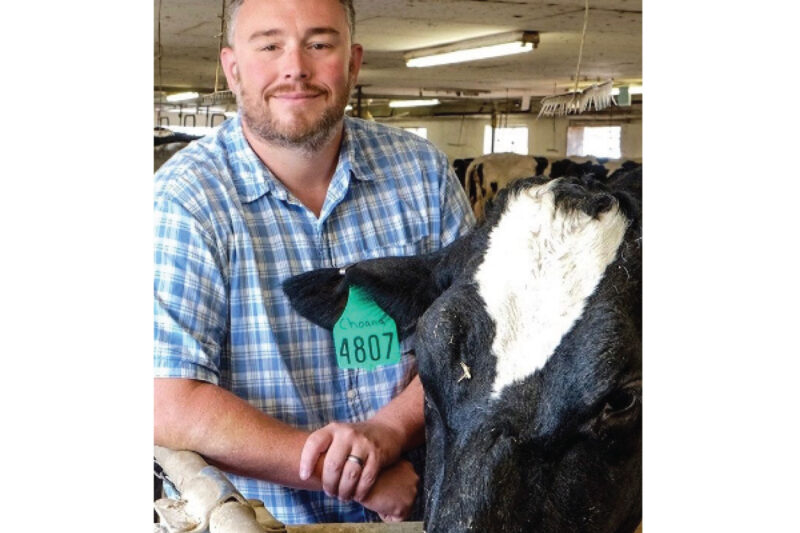
Recorded live at the Florida Ruminant Nutrition Symposium, this Journal Club episode features Dr. Heather White exploring the science of hepatic glucose production and its critical role in fueling milk synthesis. The episode is hosted by Dr. Bill Weiss. In addition, the discussion is joined by Dr. Mariana Marenho. The conversation translates complex metabolic pathways into actionable insights for dairy nutrition and on-farm management.
Episode 207: Fueling Milk Production Carbon by Carbon
In this episode of the Real Science Exchange podcast, Dr. Heather White (University of Wisconsin–Madison) and Dr. Bill Weiss (The Ohio State University) join co-host Dr. Mariana Marenho. They explore one of the most critical drivers of dairy cow performance: hepatic glucose production.
The episode opens with introductions to the panel and co-host Dr. Mariana Marenho, highlighting her background in ruminant nutrition and setting the stage for a discussion that bridges academic research with real-world application. (00:00 – 01:27)
The conversation then introduces the featured Journal of Dairy Science review paper, focusing on the regulation of hepatic glucose production “carbon by carbon.” Dr. White shares how the paper originated from an invited symposium and the collaborative effort to connect detailed biochemical mechanisms with practical dairy nutrition strategies. (01:27 – 04:15)
Why Glucose Production Matters in Dairy Cows
A key theme throughout the discussion is that dairy cows must produce nearly all of their own glucose internally. Unlike monogastrics, cows rely on hepatic gluconeogenesis to supply glucose needed for milk production. As the panel explains, this process is essential, because glucose is converted into lactose. In turn, lactose ultimately determines milk volume. (04:15 – 08:44)
The conversation reinforces that this creates a continuous metabolic demand on the liver. Cows, therefore, must maintain high levels of glucose production throughout lactation to sustain performance. (08:44 – 09:53)
Understanding Gluconeogenesis: Substrates That Drive Milk Production
Dr. White and Dr. Weiss break down the major substrates that fuel gluconeogenesis. These include propionate, amino acids, lactate, and glycerol. (09:53 – 11:13)
Propionate is emphasized as the primary glucose precursor in well-fed cows. This point underscores the importance of efficient rumen fermentation. The panel also revisits bypass starch strategies. They explain why delivering glucose directly to the small intestine does not effectively replace hepatic glucose production, due to ruminant glucose partitioning. (11:13 – 13:17)
From Biochemistry to Practical Feeding Strategies
The discussion moves into practical feeding applications. Specifically, it focuses on how producers and nutritionists can increase glucose supply by improving propionate production and rumen efficiency.
Strategies such as optimizing forage quality and maintaining consistent fermentation are discussed. In addition, using targeted dietary tools are highlighted as ways to ensure cows have sufficient precursors to support milk production. (13:17 – 14:29)
Nutrient Partitioning and Metabolic Regulation
Beyond substrate supply, the panel explores how gluconeogenesis is regulated at the metabolic level. Nutrient availability must align with gene expression and enzyme activity for efficient glucose production. As a result, nutrient partitioning is a key factor in dairy cow performance. (14:29 – 27:30)
The discussion also touches on how certain nutrients, such as choline, may influence these metabolic pathways. They may act not only as substrates, but also as regulators of liver function and overall metabolism. Research supports the critical role of liver glucose synthesis in supporting lactose production and milk yield.
Management Factors That Influence Glucose Production
From a management perspective, the panel emphasizes that consistent nutrient supply is just as important as diet formulation itself.
High-quality forage programs and strong transition cow management are discussed. Additionally, maintaining stable feed intake patterns is also critical to supporting rumen function and glucose production. (27:30 – 30:07)
The discussion further explores how feeding behavior and competition at the bunk can impact fermentation dynamics. Notably, daily intake variation can disrupt fermentation and negatively impact nutrient partitioning. (30:07 – 32:31)
Genetics and the Future of Dairy Nutrition
Finally, the episode concludes by examining how modern dairy cows have been genetically selected for higher milk production. Importantly, there is also an increased capacity for gluconeogenesis.
The remaining challenge lies in optimizing nutrition and management to fully support this genetic potential. Future opportunities will focus on precision feeding and metabolic optimization, integrating advanced research with practical on-farm strategies. (34:32 – 37:14)
Join the Real Science Exchange
Please subscribe and share with your industry friends. This helps increase awareness of topics like the impact of excess liver copper concentrations. Invite more people to join us at the Real Science Exchange virtual pub table. Please be sure to register for our upcoming Real Science Lecture Series.
Finally, if you want one of our Real Science Exchange t-shirts, screenshot your rating, review, or subscription. Then, email a picture to anh.marketing@balchem.com. Include your size and mailing address.