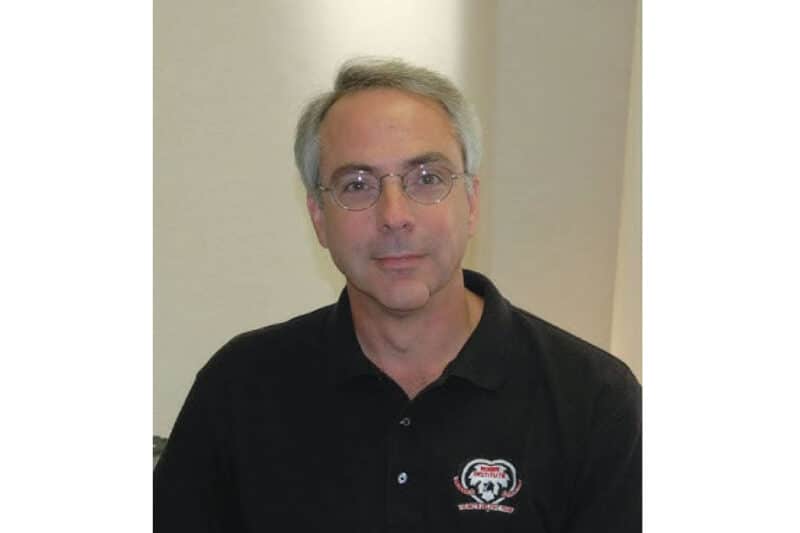
Recorded as part of the Real Science Lecture Series, this webinar features Dr. Jennifer Van Os, Associate Professor and Extension Specialist in Animal Welfare at the University of Wisconsin. Drawing on animal welfare science, behavior research, and field experience with dairy producers, she reviews the rationale, benefits, challenges, and practical implementation of social housing strategies for pre-weaned dairy calves.
Dr. Van Os opens by defining animal welfare as an animal’s subjective experience of its quality of life and explains why welfare assessments must consider both biological functioning and behavioral needs. She then introduces social housing within the broader context of calf welfare and reviews the historical reasons individual housing became standard practice in the U.S., including disease prevention, feeding control, health monitoring, and ease of handling. She contrasts this with increasing adoption of pair and group housing internationally, including recent changes in Canada and examples of social housing systems currently being used on dairy farms. (01:40 – 18:38)
From there, she reviews a large body of research demonstrating that calves are highly motivated to seek social contact and benefit from opportunities to interact with other calves. Studies show socially housed calves display more play behavior, improved social development, greater stress resilience during weaning, and enhanced learning ability and behavioral flexibility. She explains how these advantages may help calves adapt more readily to new diets, housing environments, social regrouping, and management systems throughout life. (18:38 – 26:42)
Building on that foundation, Dr. Van Os summarizes research linking social housing to increased starter intake, improved average daily gain, and greater body weights during the pre-weaning period. Drawing from review papers and a recent meta-analysis, she notes that many studies report growth advantages for socially housed calves and that no study reviewed found individually housed calves outperforming socially housed calves for intake or growth measures. She also discusses emerging evidence suggesting these benefits may persist into later life through increased body weight and greater first-lactation milk yield, while additional research explores potential protection against cold stress and consumer perceptions of calf housing practices. (26:42 – 36:00)
Attention then turns to implementation considerations for farms evaluating a transition to social housing. Dr. Van Os emphasizes the importance of strong calf health programs, including benchmarks for pre-weaning mortality and transfer of passive immunity. She reviews the roles of colostrum management, nutrition, sanitation, ventilation, space allowance, and biosecurity in maintaining calf health and notes that research generally shows similar health outcomes between individual, paired, and small-group housing. She also discusses recommendations regarding group size, age differences among calves, and the timing of pair or group formation. (36:00 – 46:59)
However, one of the most common producer concerns involves cross-sucking and inter-sucking behaviors. Dr. Van Os explains that calves are highly motivated to suckle and reviews research-supported strategies for reducing abnormal behaviors, including adequate milk allowances, gradual weaning programs, nipple feeding systems, and allowing calves additional time to satisfy their suckling motivation after milk feeding. She also discusses the limited and sometimes conflicting evidence regarding long-term consequences of these behaviors and highlights ongoing research in this area. (46:59 – 54:53)
As a result, Dr. Van Os concludes that social housing can be successfully implemented across a variety of dairy operations and is supported by substantial research demonstrating benefits for calf welfare, development, and performance. While management challenges remain, she stresses that successful adoption depends on both farm readiness and producer commitment. She closes by directing attendees to extension resources and encouraging producers to share questions and experiences from the field. (54:53 – 56:50)
Finally, a live Q&A session follows, covering behavioral differences between sexes, transitioning calves into larger groups, pacifiers and non-nutritive sucking, environmental enrichment options such as brushes, future supply-chain expectations regarding social housing, post-weaning cross-sucking behavior, optimal group size, and the development and educational use of the Moo-ving Cows training app for dairy stockmanship and cattle handling. The webinar concludes with announcements about upcoming Real Science webinars and Real Science Exchange podcast episodes. (56:50 – End)