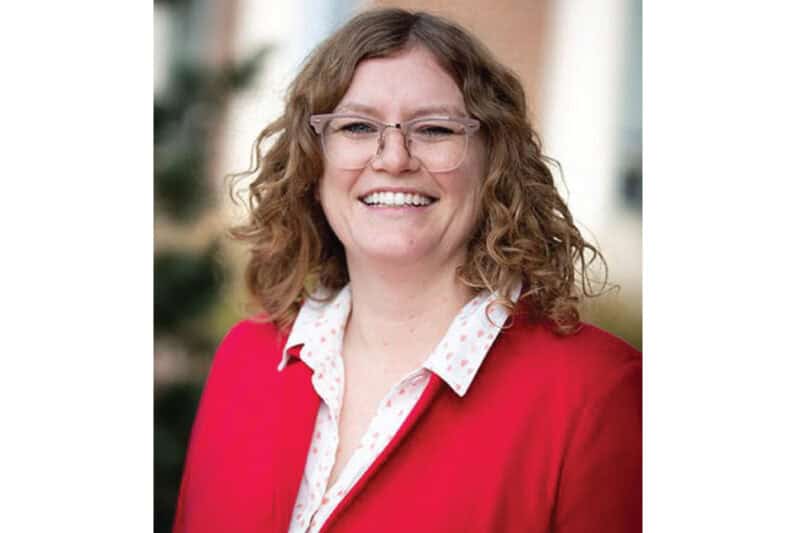
This episode features Dr. Jocelyn Johnson with STgenetics, a speaker at the ADSA 2025 Breeding and Genetics Symposium: Creating Carbon-Friendly Cows and Leveraging Omics to Improve the Sustainability of Dairy Production.
Creating Carbon-Friendly Cows
Timestamps:
Dr. Johnson’s presentation was titled “Advancing dairy sustainability through feed-efficient genetics and genomics: Research insights and applications.” She gives an overview of her talk, which focused on data STgenetics has collected and how the company has applied that data to help their customers be more sustainable. She goes on to describe some of the residual feed intake research they’ve conducted in dairy cows. (4:20)
STgenetics has invested in feed efficiency technology and has shown that selection for improved feed efficiency is correlated to a lower carbon footprint. Dr. Johnson talks about the heritability of feed efficiency compared to other traits we select for in the dairy industry. (8:16)
Dr. Pralle asks Dr. Johnson if STgenetics is measuring emissions from cows in their research. The company has partnered with Texas A&M to measure methane emissions in heifers divergently selected for feed efficiency. They found that more efficient animals produced less methane. Since that pilot project, STgenetics has purchased equipment to measure emissions at their own research facilities and has collected 2-3 years of data on beef, beef on dairy, and Holstein populations. Dr. Johnson emphasizes that the relationship between methane emissions and high milk production is somewhat of a balancing act. (11:29)
The group discusses feed additives purported to decrease methane emissions and the differences in rumen microbiomes between high and low efficiency animals. They also talk about how best to get information and technology in front of producers. (17:59)
Panelists share their take-home thoughts. (23:39)
Conclusion
Please subscribe and share with your industry friends. Invite more people to join us at the Real Science Exchange virtual pub table. In addition, reflecting on innovations in milk and related products’ future, please be sure to register for our upcoming Real Science Lecture Series webinars.
Finally, if you want one of our Real Science Exchange t-shirts, screenshot your rating, review, or subscription, and email a picture to anh.marketing@balchem.com. Include your size and mailing address, and we’ll mail you a shirt.