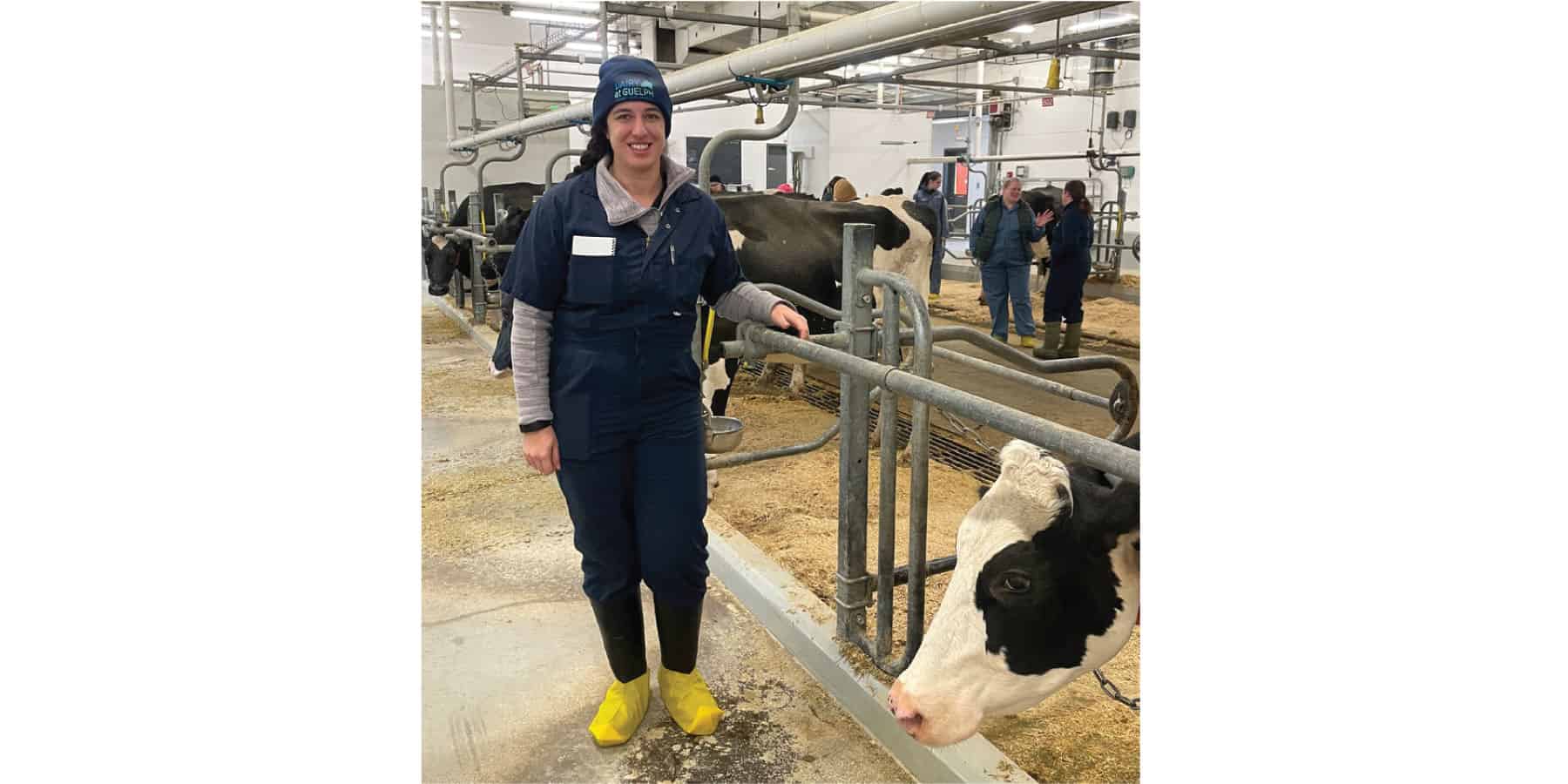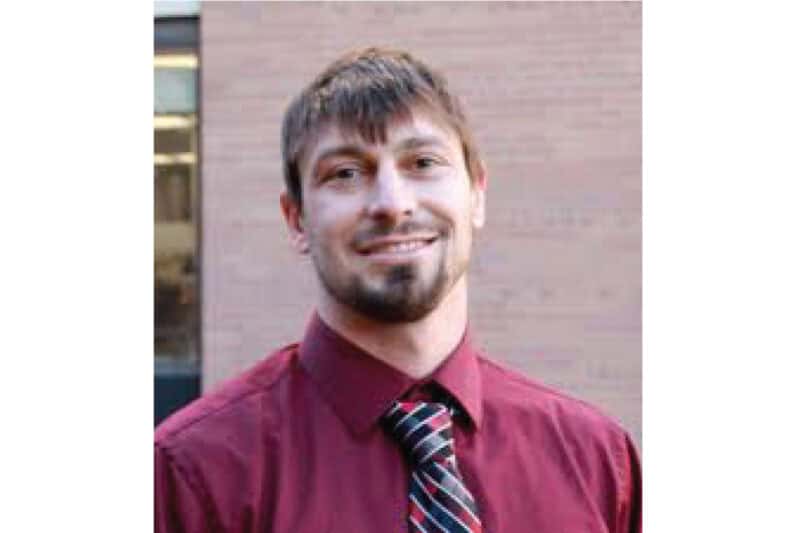
This episode’s guests were speakers on the Joint ADSA-CSAS Breeding and Genetics Symposium: Dairy Welfare—Breeding and Management Strategies at the ADSA 2025 annual meeting.
Dairy Welfare: Breeding and Management Strategies
Timestamps:
Jessica’s talk was titled “Herd Sustainability Index: Using milk recording data to evaluate dairy herd sustainability.” This index provides a national percentile ranking benchmark for producers relative to sustainability from DHI data. The index evaluates ten indicators in four major categories: longevity and culling, feeding and production, heifers, and health. (2:51)
Dr. Vasseur’s talk was titled “Improving welfare through inclusive innovation: The story of WELL-E.” This inclusive innovation delivers data-driven solutions with and for the Canadian dairy industry. It does this by integrating stakeholder and domain knowledge with cutting-edge tools and methods. These are used for the improvement of animal and human welfare. (4:48)
Dr. Vasseur talks about the development of the Code of Practice for the Care and Handling of Dairy Cattle, which producers adopted in 2023. To begin, she explains how this most recent code includes both recommendations and requirements that give dairy cattle more opportunities for movement. In particular, the code places a strong emphasis on cattle housed in tie stall environments. Building on this, Dr. Vasseur highlights research from her lab that helps dairy producers identify practical stall modifications and other strategies to improve cow comfort.
Following this, Jessica describes her master’s research on tie stall modifications. The guests then discuss how often cows housed in tie stalls bump into their stalls. In addition, they share proof‑of‑concept research that examined the effects of doubling stall size. Alongside these findings, the guests outline several recommendations that producers can apply to improve cow comfort in existing tie stall operations. (6:53)
Next, Dr. Vasseur discusses the relationship between cow comfort and longevity. She also explains the practical and economic challenges producers face when they consider converting a tie stall barn into a free stall barn. (20:12)
Later, Jessica describes the indicators used in the Herd Sustainability Index (HSI) in greater detail. Specifically, she explains that farms need at least six tests from the last 12 months, with records from at least 50% of cows, to calculate the index. Additionally, farms must meet seven of the ten HSI indicators for the calculation to proceed. She goes on to explain how producers can view their index compared to other Canadian farms and track changes in their index over time. Finally, she outlines an incentive program that recognizes high‑indexing herds and those showing the most improvement. (24:07)
Moving on, Dr. Vasseur compares cow comfort and welfare across intensive dairy production countries. In this context, she envisions technology that increases automation and reduces observer bias in processes such as lameness evaluation. (30:30)
At this point, the discussion turns to WELL‑E. So what is WELL‑E? Dr. Vasseur explains the initiative’s background and describes how it brings together animal scientists, computer scientists, and industry stakeholders to develop cutting‑edge tools that improve both animal and human welfare. (33:24)
To conclude, Jessica shares details about her PhD research on dairy cow behavior and pasture management. In one study, she compared pastures mowed on the morning of grazing with conventionally managed pastures. As a result, cows grazing on mowed pastures spent more time ruminating and drank more water. However, the study did not show differences in milk production or milk components between the two systems. (38:02)
Panelists share their take-home thoughts. (43:07)
Conclusion
Please subscribe and share with your industry friends. Invite more people to join us at the Real Science Exchange virtual pub table. In addition, reflecting on innovations in milk and related products’ future, please be sure to register for our upcoming Real Science Lecture Series webinars.
Finally, if you want one of our Real Science Exchange t-shirts, screenshot your rating, review, or subscription, and email a picture to anh.marketing@balchem.com. Include your size and mailing address, and we’ll mail you a shirt.